Kathmandu, 24 May 2026 (Jestha 10, 2083)
A Historic Step for Financial Inclusion: NAB Commends Nepal Rastra Bank’s Landmark Directive on Accessible Banking for Blind and Visually Impaired Persons
NRB’s Integrated Directive 2082 Amendment Marks a Turning Point-NAB Stands Ready as a Full Implementation Partner
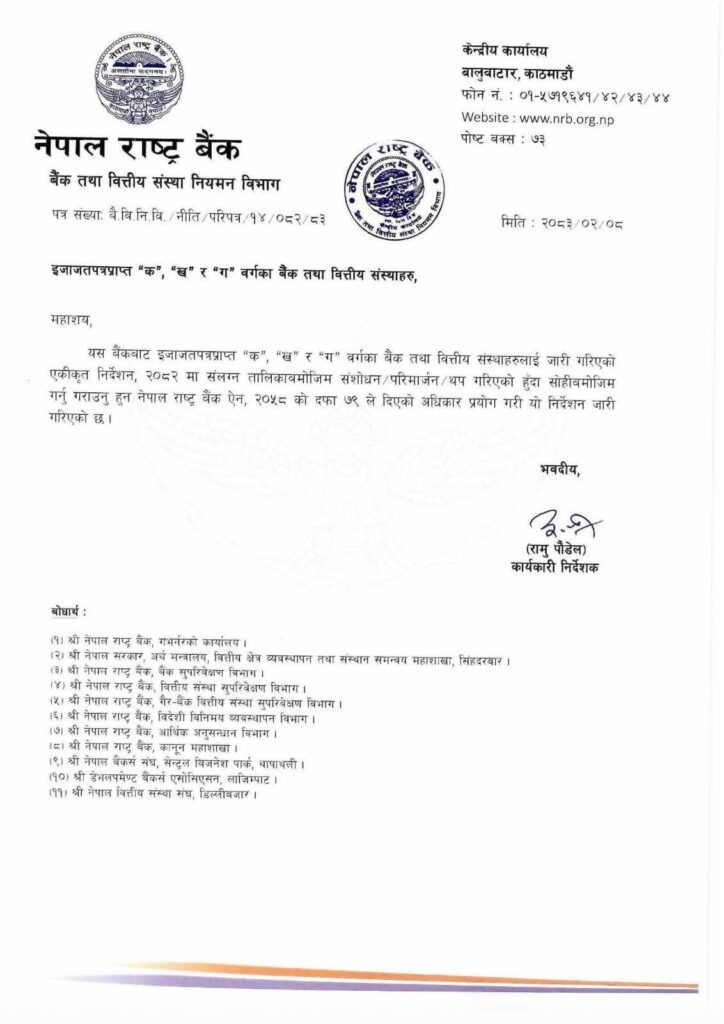
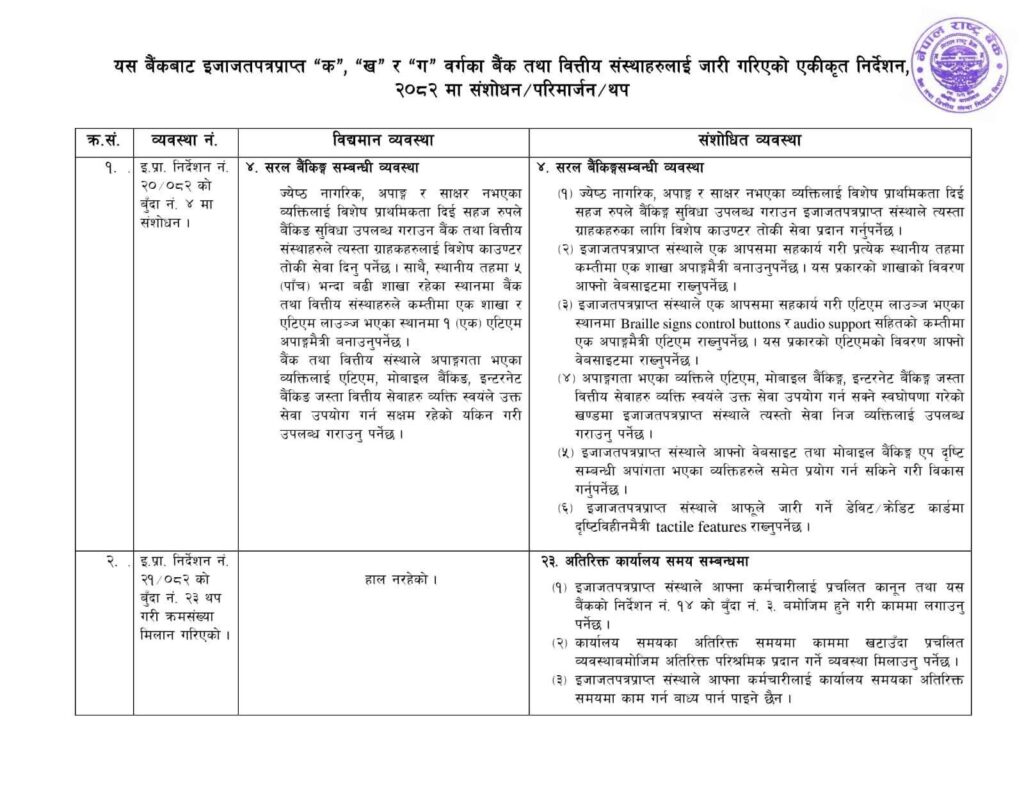
The Nepal Association of the Blind (NAB) a national umbrella organization of blind and partially sighted persons, warmly welcomes the amendment to Nepal Rastra Bank’s (NRB) Integrated Directive 2082, issued by the Bank and Financial Institution Regulation Department on Jestha 8, 2083 (Directive No. 10/081/12). This is a moment NAB has worked toward for many years, and we extend our deepest appreciation to the NRB governor and his leadership team for their vision and decisive action.
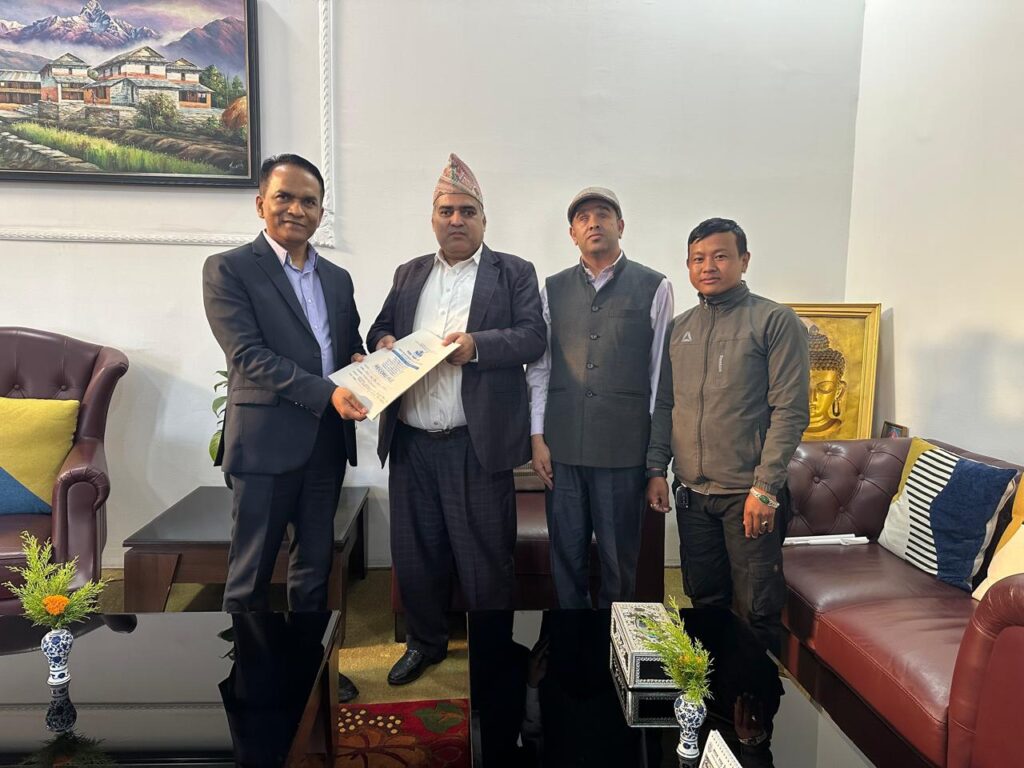
This directive demonstrates what becomes possible when a national regulatory authority chooses to listen to the evidence, to the law, and to the lived experience of persons with disabilities. NAB records its profound appreciation to the Honorable Governor and to the NRB Policy Department for their willingness to receive, engage with, and act upon the policy concerns of civil society and organizations of persons with disabilities (OPDs). The spirit of inclusive governance they have demonstrated sets a standard for all public institutions in Nepal.
THE RESULT OF YEARS OF PERSISTENT ADVOCACY
This directive is the hard-won result of NAB’s sustained, evidence-based advocacy spanning many years. NAB has consistently documented the financial exclusion of Nepal’s approximately 147,000 blind and visually impaired citizens through community surveys, technical submissions, inter-agency dialogue, and formal policy engagements.
Most recently, on 19 May 2026, NAB formally submitted a comprehensive policy suggestion paper to NRB’s policy department, presenting seven reform pillars and 21 specific, time-bound policy recommendations. These were grounded in Nepal’s existing constitutional and legislative framework, including:
- The Act Relating to Rights of Persons with Disabilities 2074
- Articles 18 and 42 of the Constitution of Nepal
- Nepal’s obligations under the UNCRPD, ratified in 2010
NAB regards this directive as the beginning of a partnership, not the conclusion of an advocacy effort.
WHAT THE DIRECTIVE PROVIDES: A SIGNIFICANT BEGINNING
NRB’s amendment to Integrated Directive No. 20/082 (Clause 4) introduces six important provisions for accessible banking:
- Dedicated special counters: Senior citizens, persons with disabilities, and persons who cannot read or write, ensuring priority service.
- Mandatory disability-friendly branches: Every local level where a licensed institution operates five or more branches, with branch details published on the institution’s website.
- Mandatory disability-friendly ATMs: Braille signs, control buttons, and audio support at every ATM lounge, with details published on institutional websites.
- Self-declaration-based access: ATM, mobile banking, and internet banking: where a person with a disability declares they are capable of independently using these services, the bank must provide access-without requiring a witness or guardian.
- Accessible digital services: Banking applications that persons with disabilities, including blind persons, are able to use independently.
- Tactile features on cards: Credit cards to enable blind and visually impaired persons to identify and use their cards independently.
ENDING THE WITNESS REQUIREMENT: A RESTORATION OF DIGNITY
Of all the barriers blind and visually impaired persons face in Nepal’s financial system, the mandatory witness requirement has been the most humiliating and the most pervasive. For decades, literate, educated, professionally accomplished blind individuals-teachers, civil servants, entrepreneurs, parents-have been turned away from bank counters or subjected to paternalistic conditions that treat them as legally incapable. This directive’s provision for self-declaration-based access is not a small administrative fix: it is the restoration of dignity and legal personhood to an entire community of citizens. It is the entry point to the financial system that has been denied for far too long.
This reform places Nepal alongside India’s Reserve Bank of India (RBI), Pakistan’s State Bank of Pakistan (SBP), and the European Union’s European Accessibility Act 2025, all of which have prohibited such discriminatory requirements.
IMPORTANT ACTION POINTS: THE WORK AHEAD
While NAB celebrates this directive, we are transparent: this is a beginning, not a conclusion. The provisions must now be translated into practice across all licensed banks and financial institutions (BFIs) in Nepal. NAB identifies the following critical action points:
- Effective and time-bound implementation: NRB must issue implementation timelines and monitor BFI compliance actively. A clear compliance reporting framework, with measurable milestones, must be established.
- Digital accessibility-WCAG 2.1 compliance: Currently, no major Nepali bank mobile application or website meets WCAG 2.1 Level AA-the global minimum standard for screen reader accessibility. The directive’s mandate must be supported by a binding timeline, third-party audit requirements, and technical guidance.
- Talking ATMs with full audio support: Nepal’s 10,000+ ATMs remain completely inaccessible to blind users-there is no talking ATM in operation anywhere in the country. NRB must issue a clear retrofitting timeline and ensure all new ATM installations comply from the date of this directive.
- Accessible customer documentation: KYC forms, loan agreements, account statements, and financial literacy materials must be available in screen reader-compatible digital formats, audio, and Braille.
- Mandatory disability inclusion training: all BFI frontline staff: A Disability Inclusion Certification Module, co-developed with OPDs, must be introduced as a mandatory component of BFI staff training.
- Disability-disaggregated data collection: NRB must direct all BFIs to collect and report disaggregated data on customers with disabilities. Without data, there is no accountability.
- Inclusive financial products and credit access: The existing 1% microfinance interest rate concession for persons with disabilities must be widely publicized and made accessible in practice.
- Tactile debit and credit cards-immediate rollout: BFIs must implement tactile card features for all newly issued cards, with a transition plan for existing cards.
NAB IS READY: A COMMITTED IMPLEMENTATION PARTNER
NAB does not issue statements and step back. We come forward as a ready, capable, and committed partner in every aspect of this directive’s implementation. Specifically, NAB is prepared to:
- Co-develop and deliver a Disability Inclusion Certification Module for BFI frontline staff, drawing on NAB’s nationally recognized Assistive Technology Training Program.
- Provide expert advisory and testing services on WCAG 2.1 compliance, screen reader compatibility, and accessible digital interface design for bank websites and mobile applications.
- Design and distribute accessible consumer rights and financial literacy materials in Braille, audio, and screen reader-compatible digital formats across all seven provinces.
- Document and channel blind and visually impaired (BVI) community feedback
- and complaints to NRB and BFIs through our 59 district and 53 municipal branches.
- Publish an annual independent BVI Banking Accessibility Shadow Report to complement NRB’s monitoring and accountability framework.
- Participate in any Joint Working Group or advisory body constituted by NRB to oversee implementation, bringing direct lived experience and technical expertise.
A MESSAGE TO NEPAL’S BANKS AND FINANCIAL INSTITUTIONS
NAB wishes to address directly the banks and financial institutions of Nepal. This directive is not a burden. Nepal’s 147,000 blind and visually impaired citizens, together with their families, caregivers, and support networks, represent a significant and entirely untapped customer segment. When your services are accessible, you do not merely discharge a legal obligation: you open a market, build loyalty, and demonstrate that your institution stands for the dignity of every Nepali customer.
Global experience shows that customers with disabilities, when treated with respect, are among the most loyal. NAB stands ready to support every BFI in this transition.
Nepal Association of the Blind stands at a historic moment in its three-decade journey of advocacy. This directive by Nepal Rastra Bank is proof that principled, evidence-based, and persistent advocacy by organizations of persons with disabilities can move institutions and change lives. NAB thanks the NRB Governor and his team from the bottom of our hearts-and we commit to walking alongside NRB and Nepal’s BFIs every step of the way, until every blind and visually impaired person in Nepal can walk into a bank, open an account, withdraw cash, and manage their finances with full dignity, independence, and equality.
Nepal Association of the Blind (NAB)
Sukedhara, Kathmandu-4, Nepal
Phone: +977-01-4376598 / 4376580
Email: [email protected] | Website: www.nabnepal.org